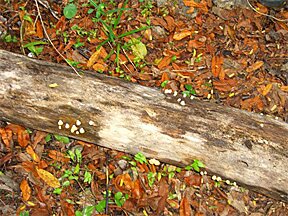
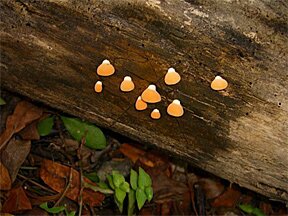
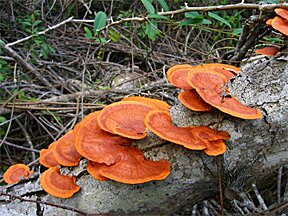
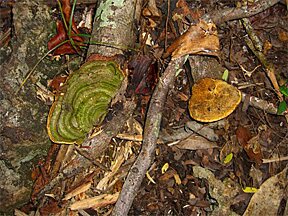
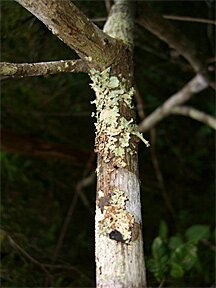
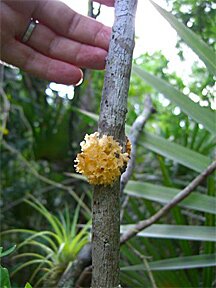
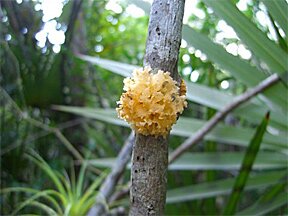
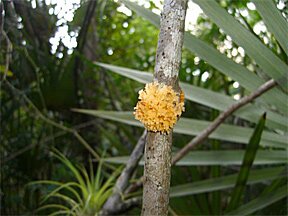
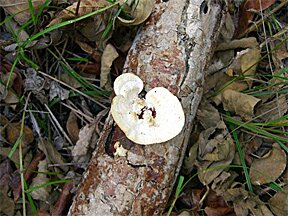
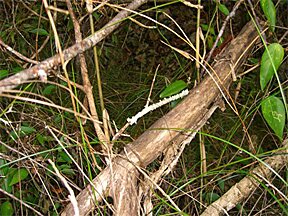
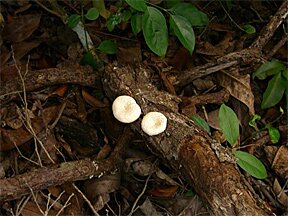
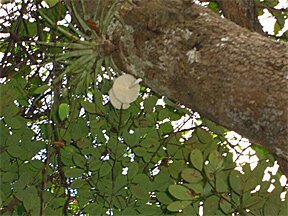
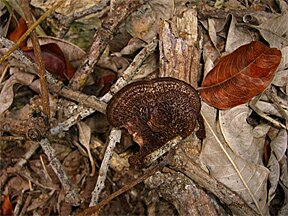
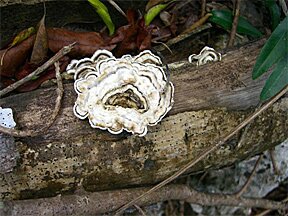
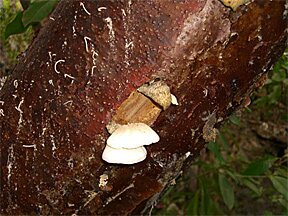
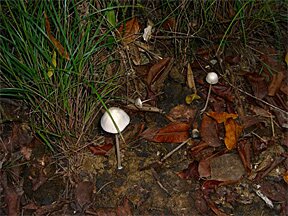
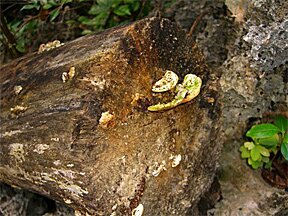
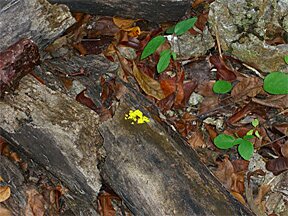
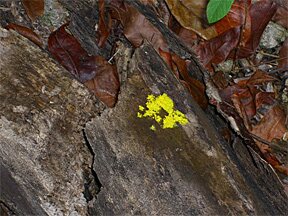
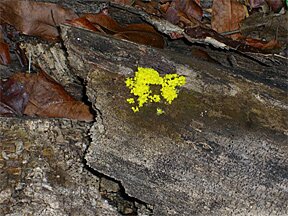
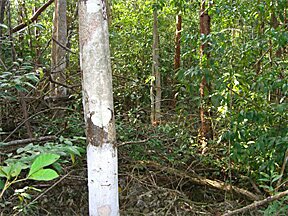
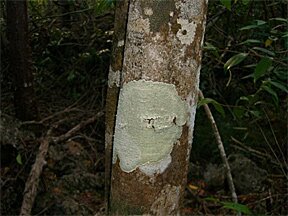
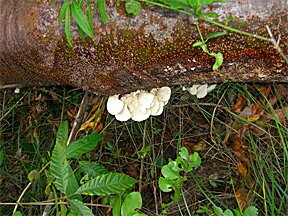
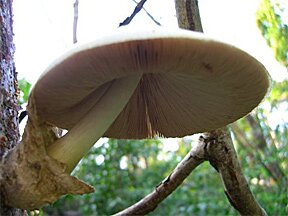
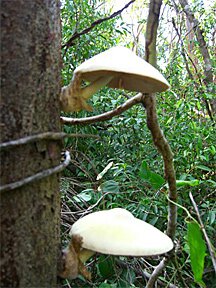
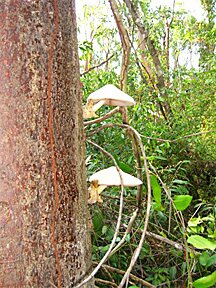
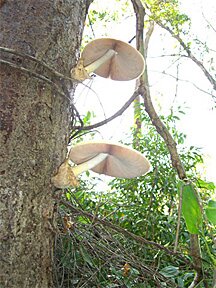
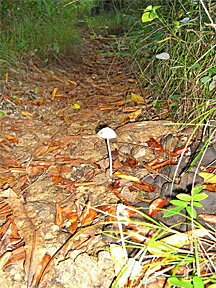
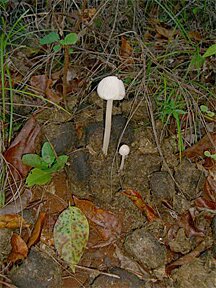
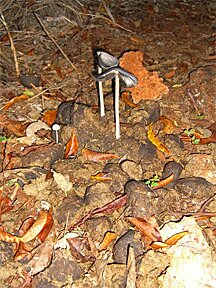
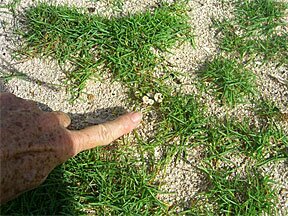
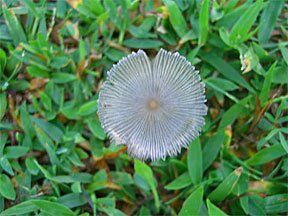
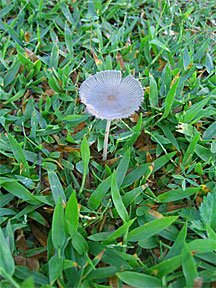
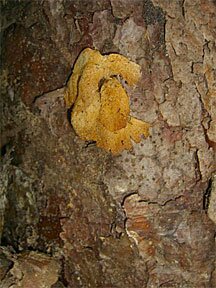
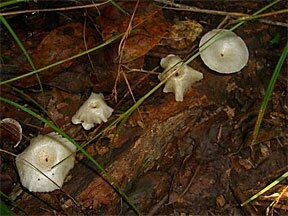
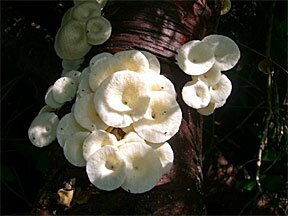
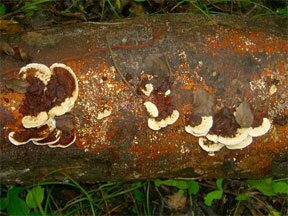
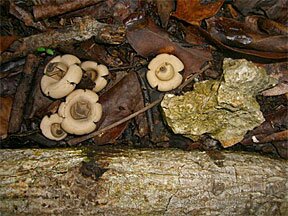
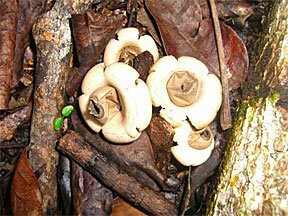
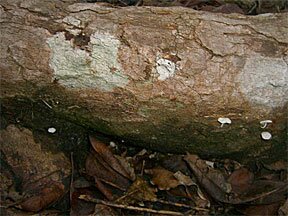
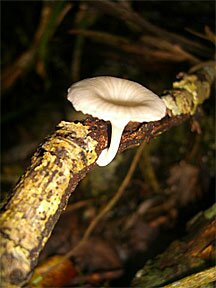
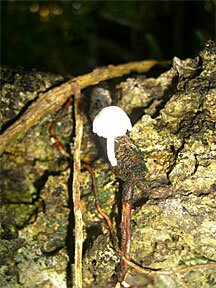
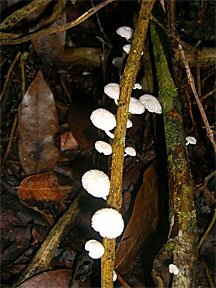
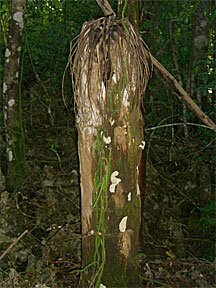
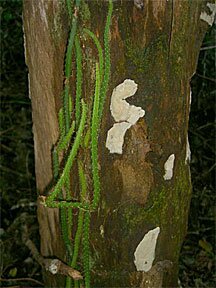
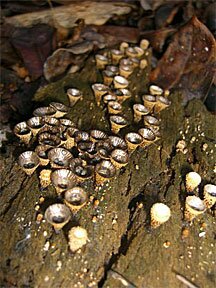
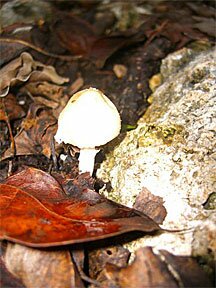
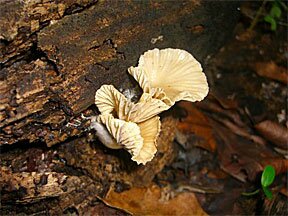
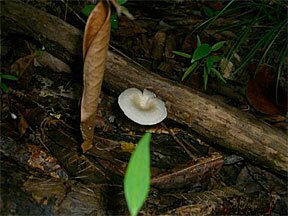
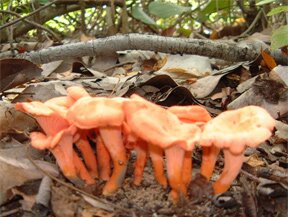
| Cayman Islands mushrooms have never been scientifically studied or documented. Several Europeans residing here, including a prominent chef and restaurant owner have been gathering and consuming wild Cayman Islands’ "chanterelles" presumed to be Cantharellus cibarius for years with no particular ill effects on themselves or their customers. However, some people have reported a slight “tingling” in their throats from eating these and some people are allergic to all mushrooms. EXTREME CAUTION is advised when consuming any wild mushrooms. There is another species called the False Chanterelle or Hygrophoropsis aurantiaca that is very similar. It is non-poisonous but said to cause “gastrointestinal problems.” Information, including photos, is available about both types on Wikipedia and on other sites. The photos posted on here are of Cayman Islands mushrooms and positive identification is not available so far. |
| |
| |
| Because so many trees fell down in Hurricane Ivan and are now rotting on the ground in the forests, the winter rains (2005/2006) have given the Cayman Islands a bumper crop of fungi - |
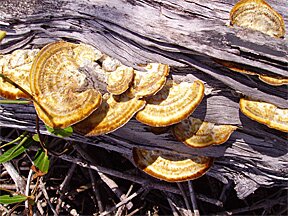
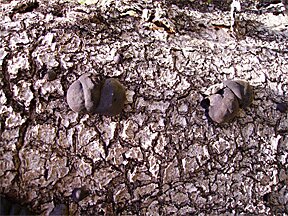
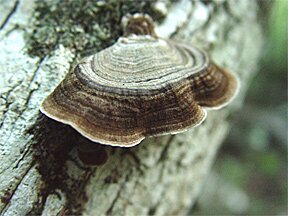
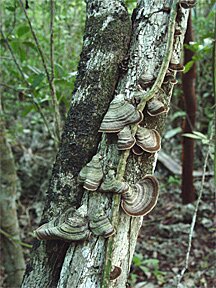
| There has never been a comprehensive study of Cayman's fungi - so most of the photos here are not identified. We will post the names of the species as we learn them. |
| (all photos by Lois Blumenthal unless noted) |
| |
 |
 |
| Chanterelles? |
Photo by: Ann Stafford
|
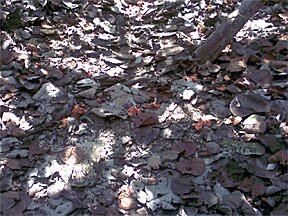
Wild mushrooms similar in appearance to chanterelles are often found growing in the mulch under and around fallen Seagrape leaves |
|
| |
|
|
|
|
|
|
|
|
|
|
|
|
|
|
|
|
|
|
|
|
|
|
|
|
|
|
|
|
|
|
| |
 |
 |
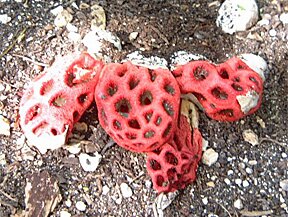
| Latticed Stinkhorn fungi |
Photo by: Ann Stafford
|
Photo by: Ross Wrangham
|
|
| |
 |
 |
|
Photo by: Ross Wrangham
|
Photo by: Ross Wrangham
|
|
| |
 |
|
Photo by: Ross Wrangham
|
|
| |
|
The following grop of images (20) were taken in October 2007 on Mastic Trail, Grand Cayman - Photos by Lois Blumenthal
|
|
|
|
|
|
|
|
|
|
|
|
|
|
|
|
|
|
|
|
|
| |
|
|
| |